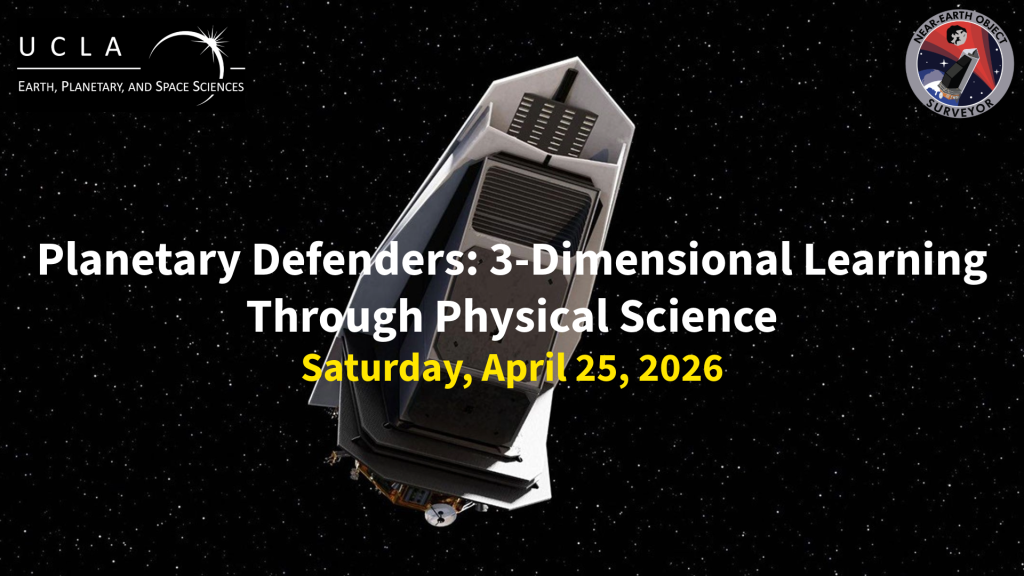
We would like to welcome teachers and educators from the greater Los Angeles area to our Spring 2026 Planetary Defenders: 3-Dimensional Learning Through Physical Science teacher-training workshop. This workshop bridges the gap between theoretical concepts and the NASA NEO Surveyor Mission to demystify asteroids, comets, and highlight the importance of planetary defense through three-dimensional, hands-on learning experiences.
Empower your students to become the next generation of planetary scientists and defenders!
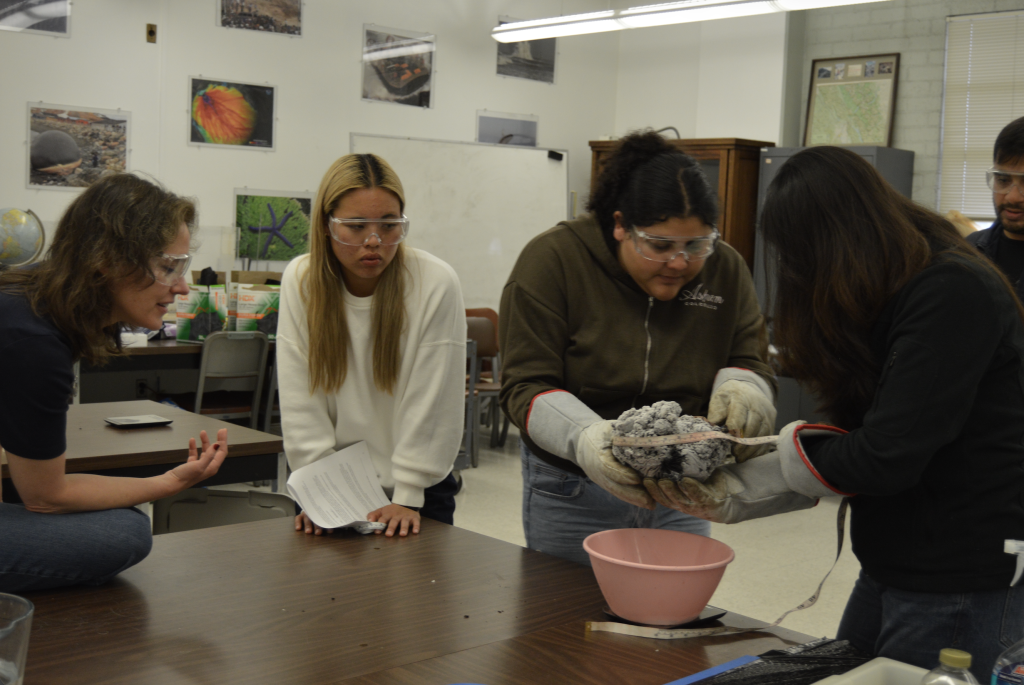
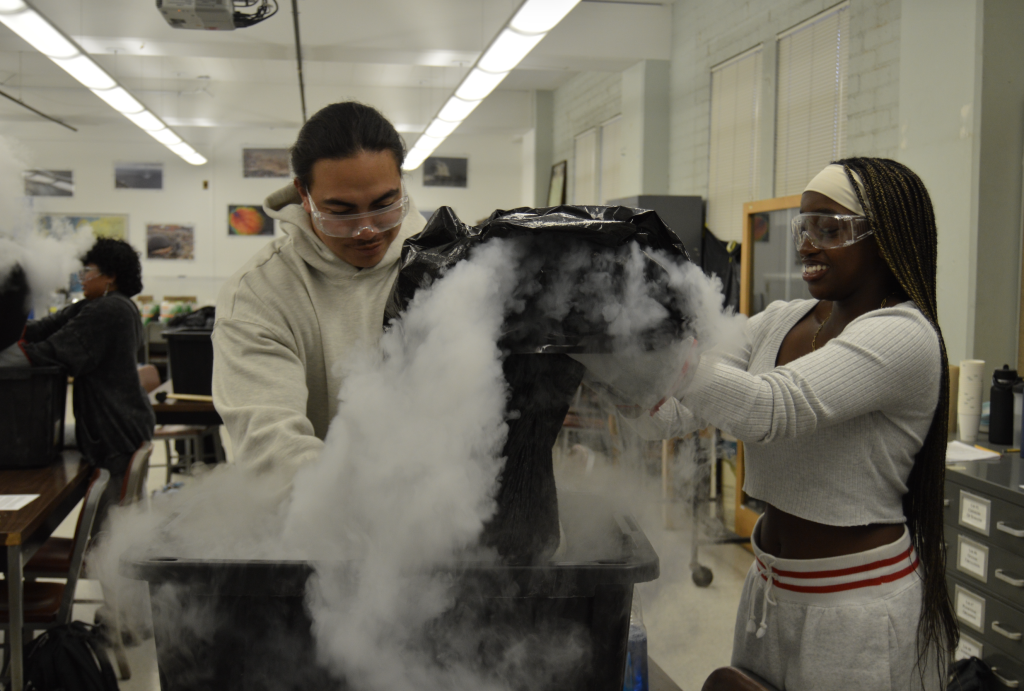
Discover how to use inquiry, modeling and experiential learning, like our popular “Build-a-Comet” lab, to make complex geoscience concepts memorable, meaningful, and genuinely exciting for every student in your class.
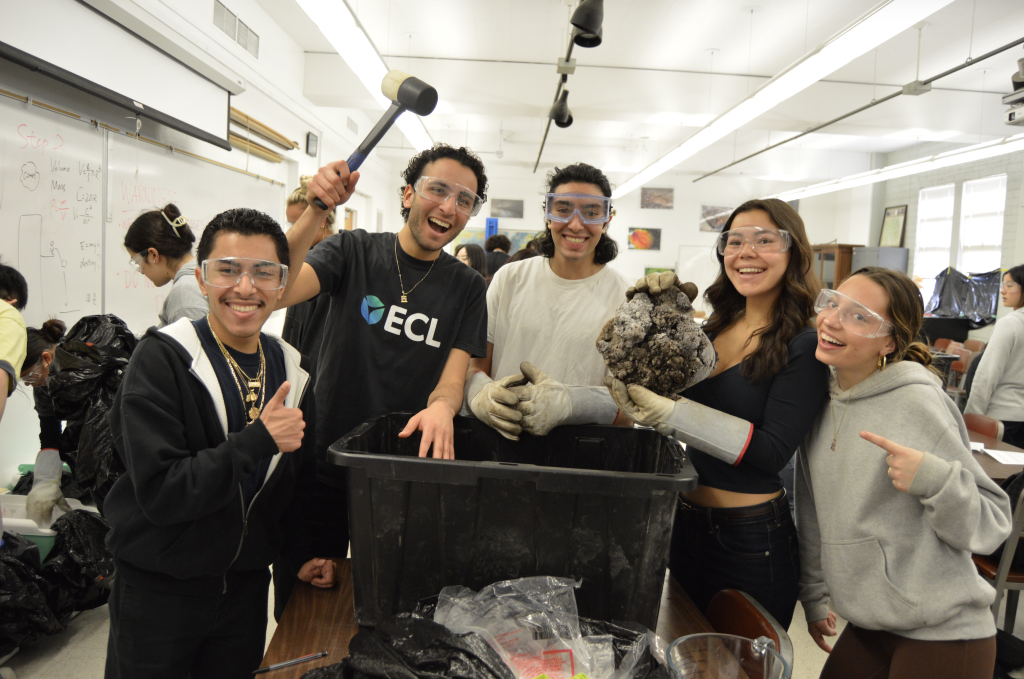
The cratering demo builds on students’ prior knowledge of density, sedimentary rock layering, and impacts and combines it with visuals to highlight how a crater is formed and how the ejecta exposes older rock layers hidden underground.
Learn from real scientists who are passionate about planetary science, planetary defense, geology, and STEM but are also wanting to learn how we can better serve you as an educator.
We welcome all educators interested in bringing hands-on planetary science activities into their classroom.
Submit this Google interest form to receive updates for our Spring Workshop on Saturday, April 25, 2026 from 9am-3pm. Total cost to attend is $30.
Light breakfast, refreshments, and classroom resources will be provided!
Note: Our registration website is currently unavailable – we will send a link to everyone that fills out this Interest Form once it is ready to use.
The Mission Continues in the Classroom
We invest in these workshops because training educators is the most effective way to strengthen the STEM pipeline. Every teacher who attends becomes a vital partner in our mission, capable of inspiring dozens of future scientists who may one day use the very data collected by NEO Surveyor.
Jr. Planetary Defenders Teacher-Training Program: Middle School Educators Dive into Planetary Defense
STEM outreach has been at the forefront for EPSS this November!
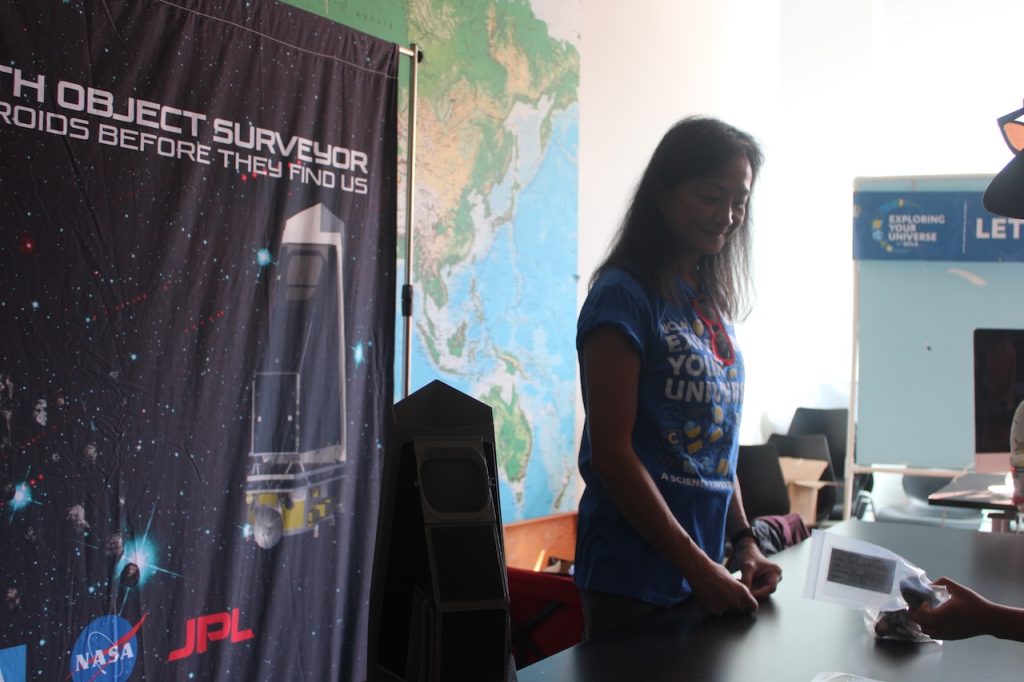
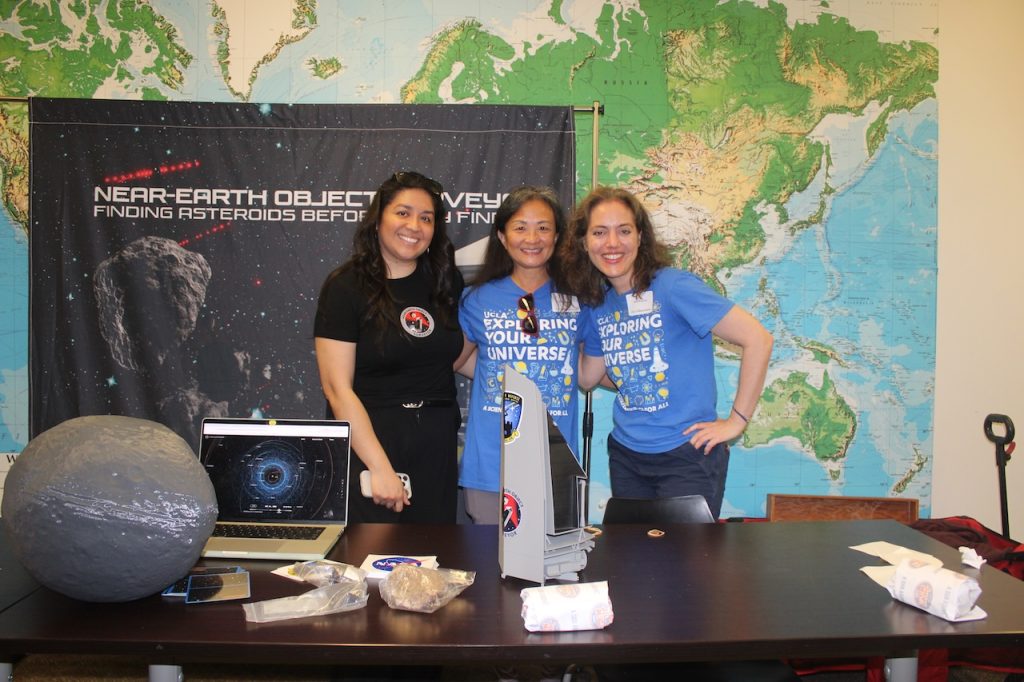
On Sunday, November 2nd, NEO Surveyor hosted the “Find Asteroids Before They Find Us” booth at Exploring Your Universe – the largest annual STEM outreach event in Los Angeles – where UCLA welcomed over 11,000 visitors. We explored asteroids and how to find them using an infrared telescope.
Jr. Planetary Defenders Teacher-Training Workshop
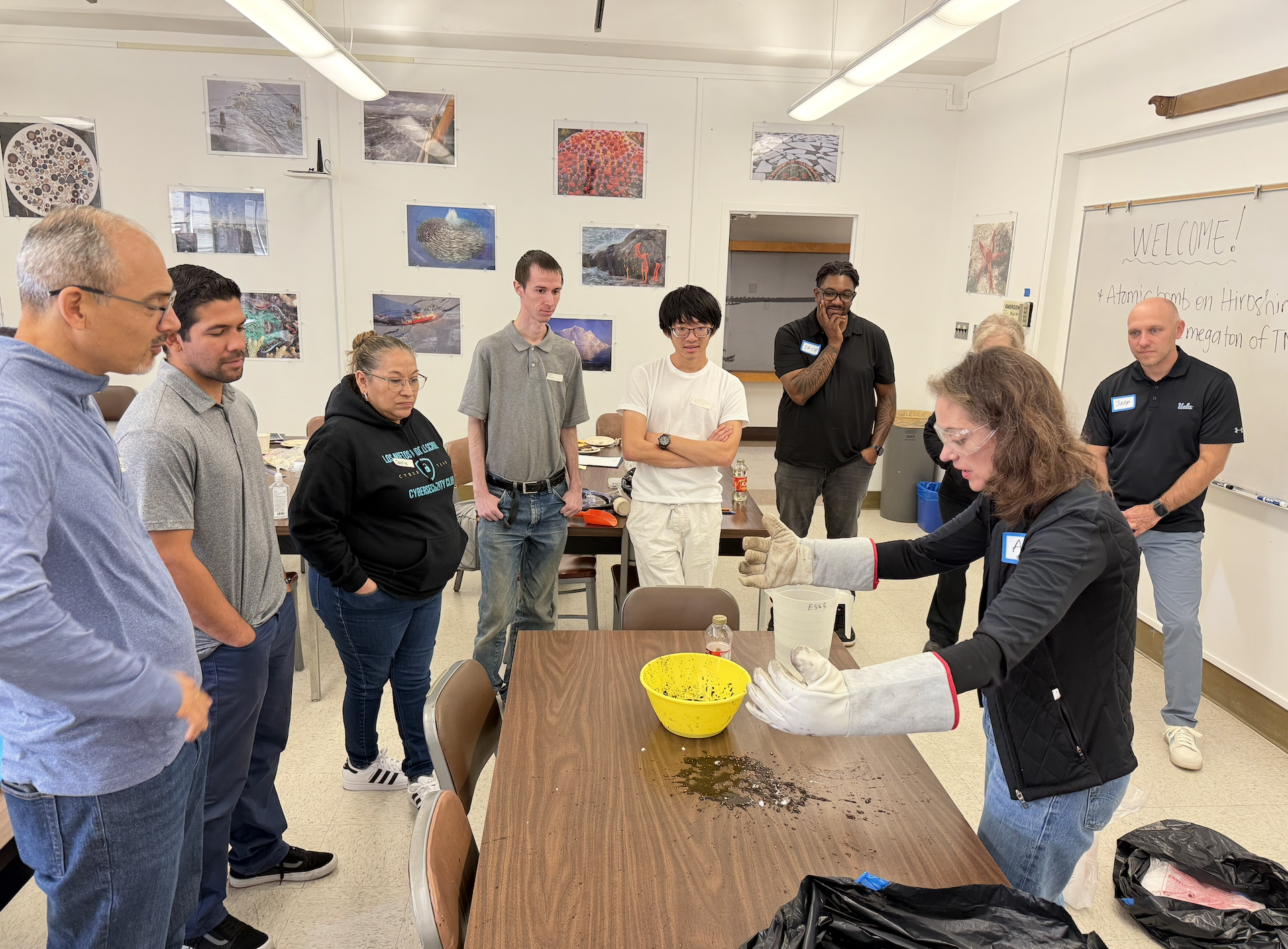
On Saturday, November 8th, a dynamic group of middle school science educators gathered for an intensive, hands-on NEO Surveyor Teacher-Training Workshop! The goal? To arm these incredible teachers with the cutting-edge content, resources, and confidence needed to bring the excitement of space exploration and Planetary Defense directly into their classrooms.
We know that to truly inspire the next generation of scientists and engineers, teachers need more than just textbooks—they need to feel empowered. This workshop delivered exactly that, turning educators into active participants in the mission.
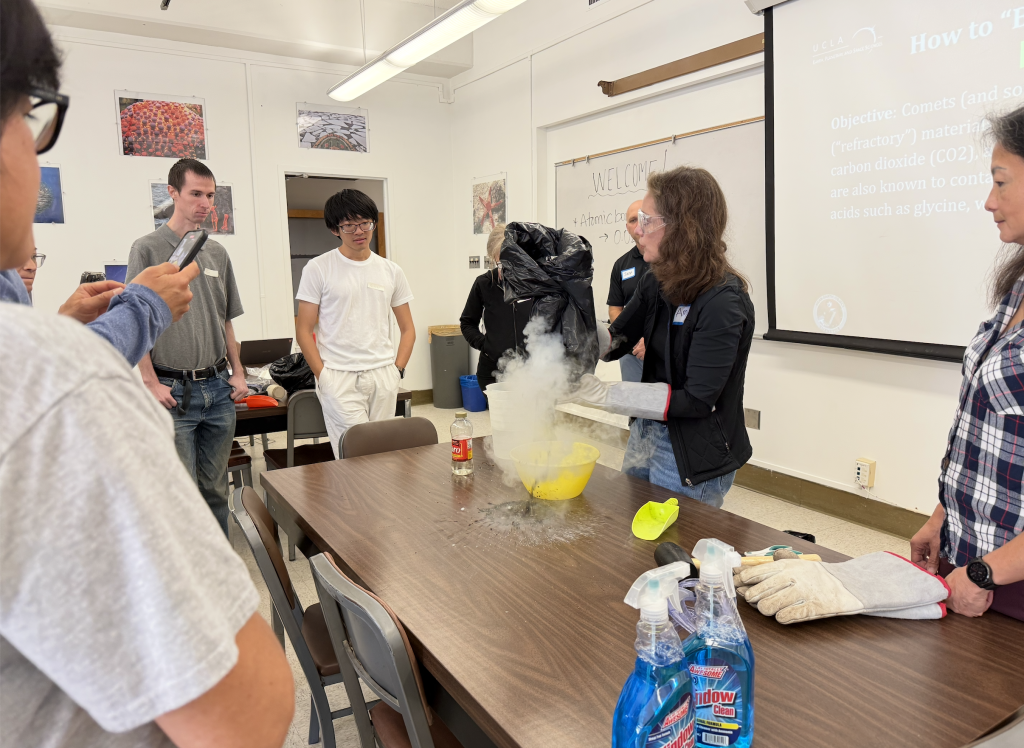
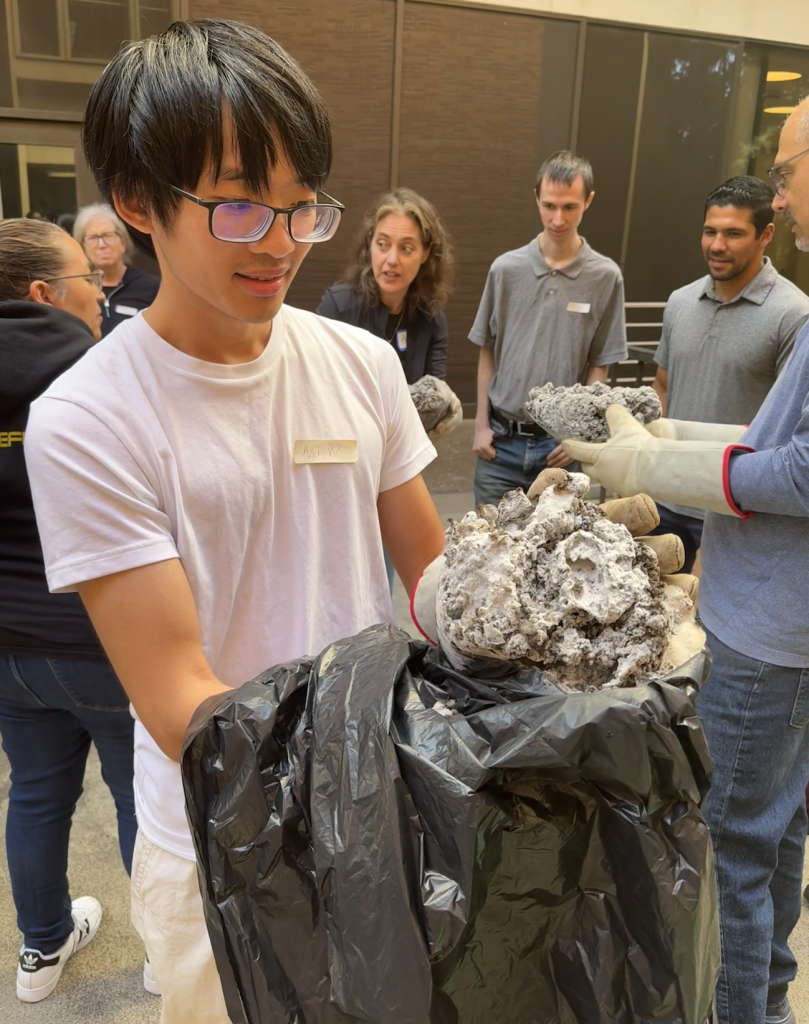
Dr. Amy Mainzer (NEO Surveyor P.I.) showing us how to Build-Your-Own Comet.
The core of the training focused on translating complex planetary science concepts into fun, inquiry-based activities aligned with Science and Engineering Practices.
The highlights of the day included:
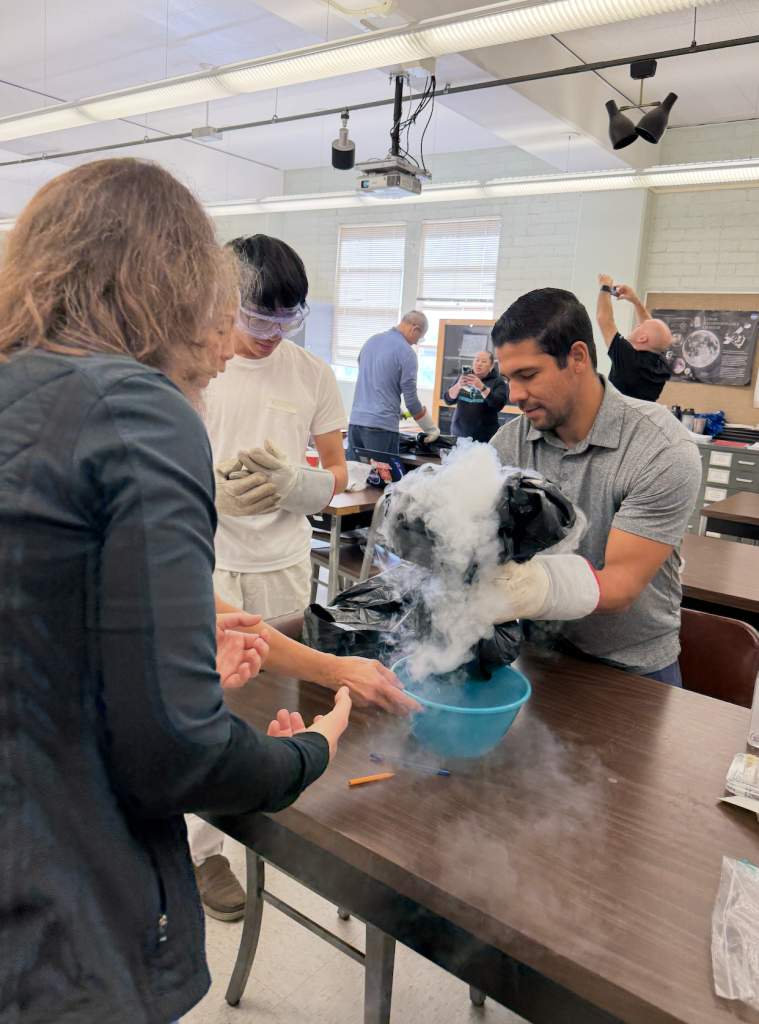
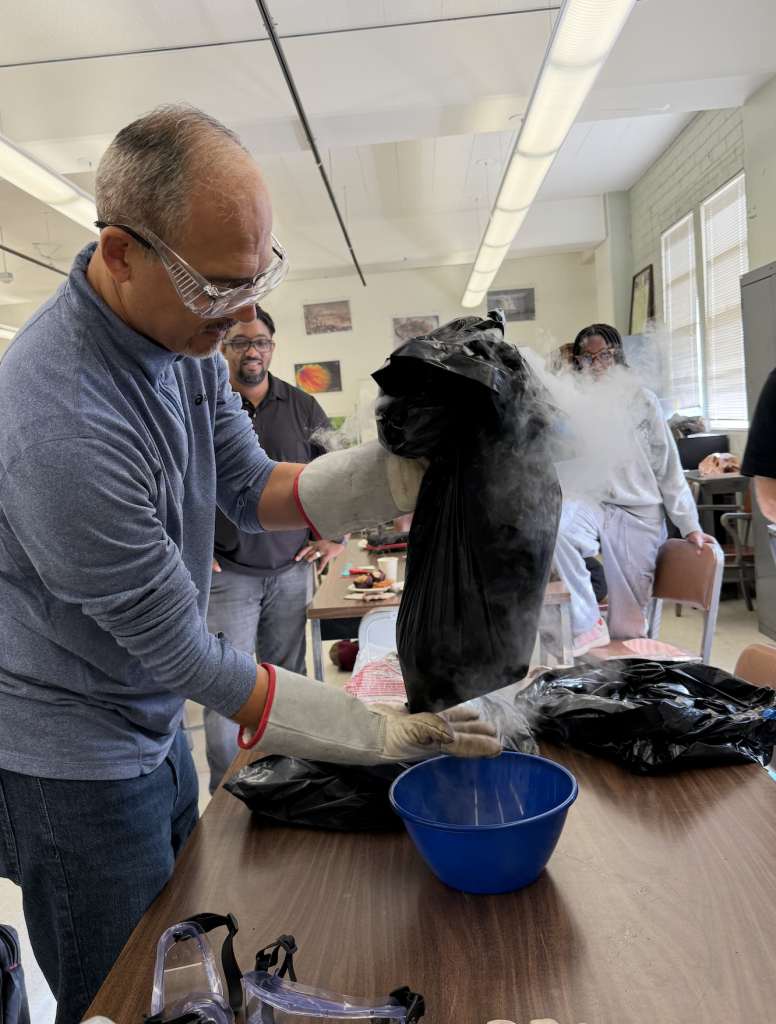
☄️ Building a Comet:
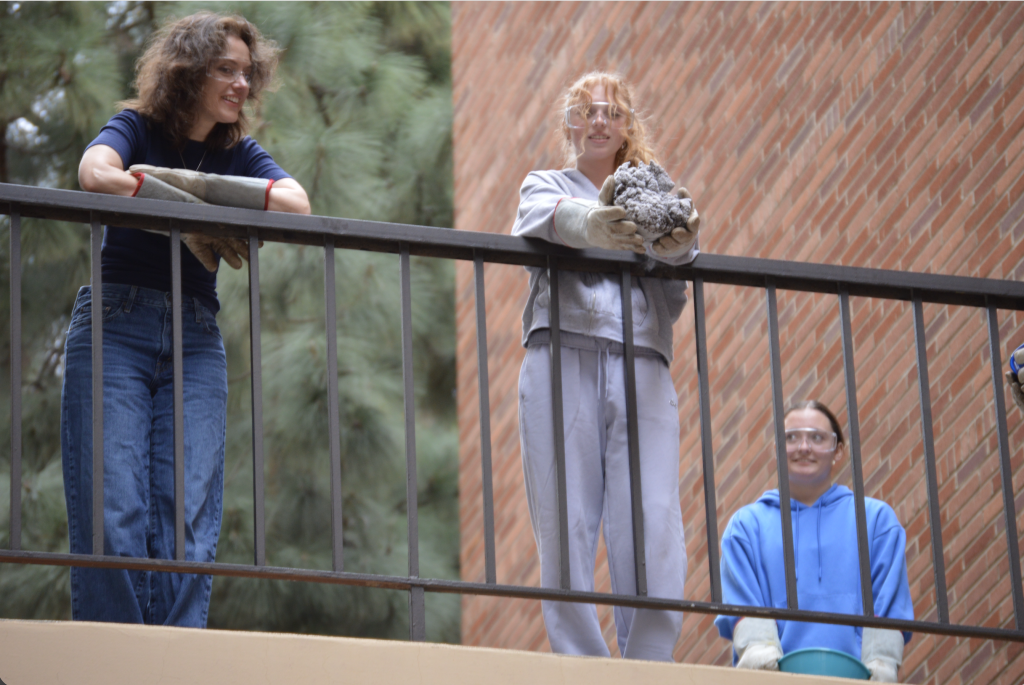
Using dry ice and common materials, teachers physically constructed and analyzed their own model comets. This hands-on activity transformed an abstract concept—icy “dirty snowballs” from the outer Solar System—into a tangible experience.
☄️ Exploring Asteroids and Meteorites:
Participants got up close and personal with real-world samples, examining the composition and structure of actual meteorites. This reinforced the importance of missions like NEO Surveyor, which uses infrared (heat) vision to detect and track these cosmic neighbors that glow with the Sun’s heat.
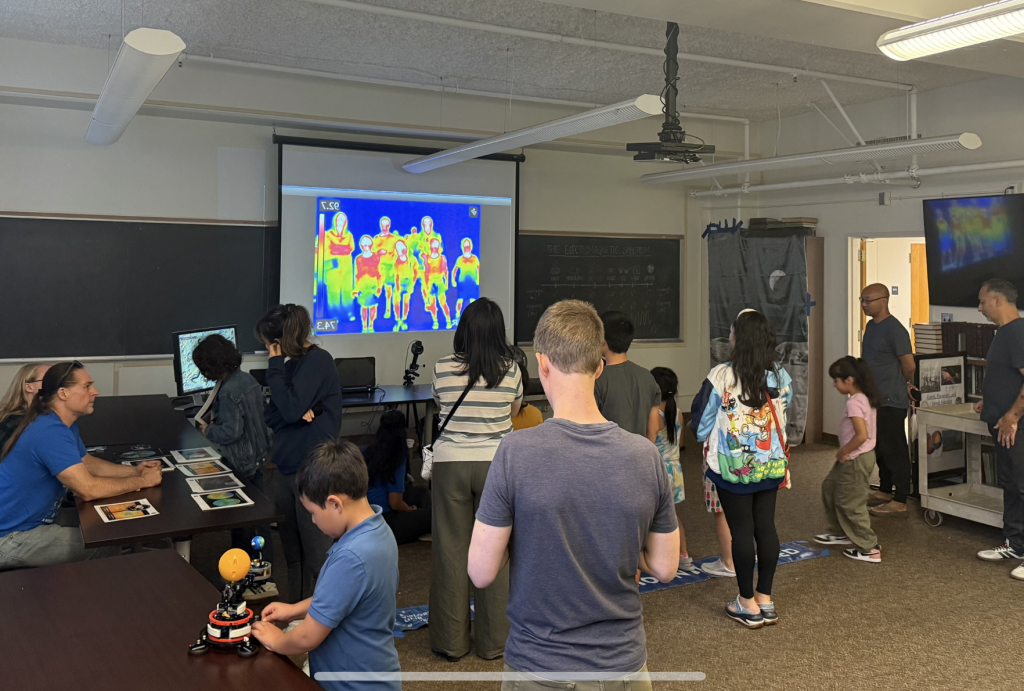
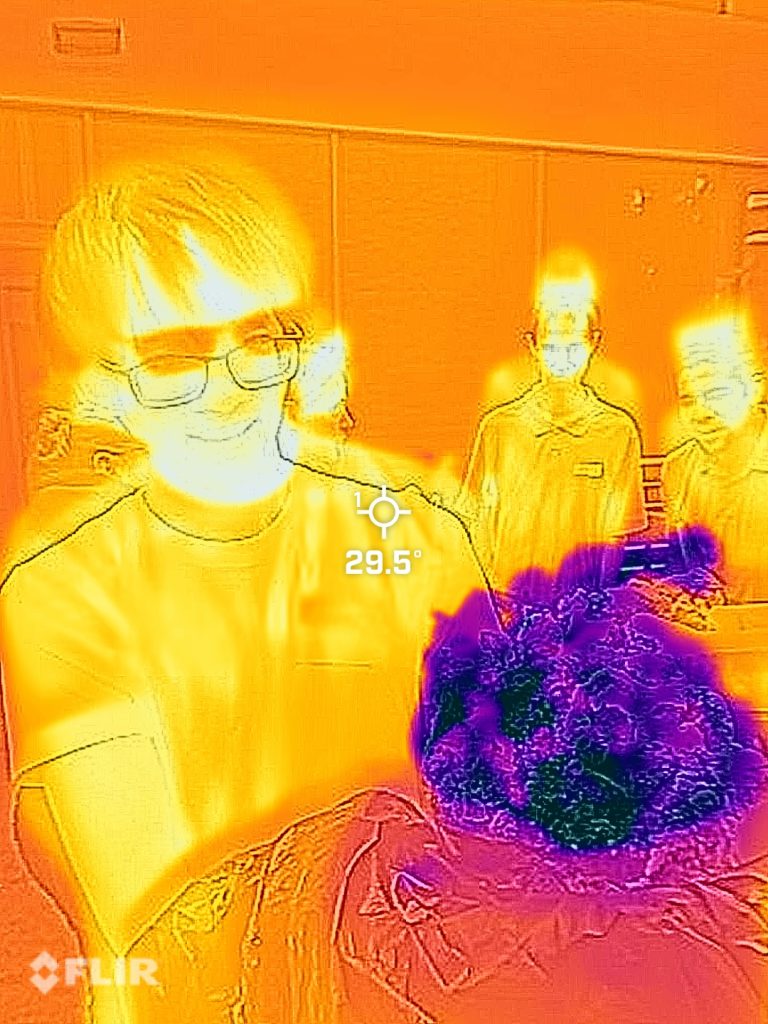
Dropping our DIY Comets off the 3rd floor of the Geology Building. Video recorded using Forward Looking Infrared Camera. White and red colors represent warmer objects, purple and blue colors represent cooler objects.
Building Confidence and Community
Beyond the exciting activities, the workshop was a fantastic opportunity for teachers to connect and collaborate. This learning community is vital for strengthening teaching skills across teachers and professionals.
The Mission Continues in the Classroom
We invest in these workshops because training educators is the most effective way to strengthen the STEM pipeline. Every teacher who attended is now a vital partner in our mission, capable of inspiring dozens of future scientists who may one day use the very data collected by NEO Surveyor.
A huge thank you to every educator who joined us. The enthusiasm, collaboration, and dedication you showed was truly incredible, and we can’t wait to see the amazing things your students do this year!
“Large amount of potential activities and relevant science to pull from”
“I really appreciated getting to hear from experts about what they’re working on. I also really appreciated the hands on activities that we did that I can take back to my classroom.”
“Switching from the teacher to student hat and back reminded me of how I need to support my students as they are learning.”
Ready to bring Planetary Defense into your classroom?
The Near-Earth Object (NEO) Surveyor mission has reached a major milestone, successfully passing its Critical Design Review (CDR). This achievement marks a crucial step toward launching NASA’s next-generation infrared space telescope dedicated to detecting and characterizing hazardous asteroids and comets.
With this milestone, NEO Surveyor advances into the final stages of development, bringing it closer to its goal of strengthening planetary defense efforts. The mission will enhance our ability to detect potentially hazardous near-Earth objects, supporting NASA’s commitment to planetary protection.
For more details, read the full NASA announcement here.
NASA Extends UArizona-Led Asteroid Search Mission
For two more years, NASA’s Near-Earth Object Wide-field Infrared Survey Explorer, or NEOWISE, will continue its hunt for asteroids and comets – including objects that could pose a hazard to Earth.
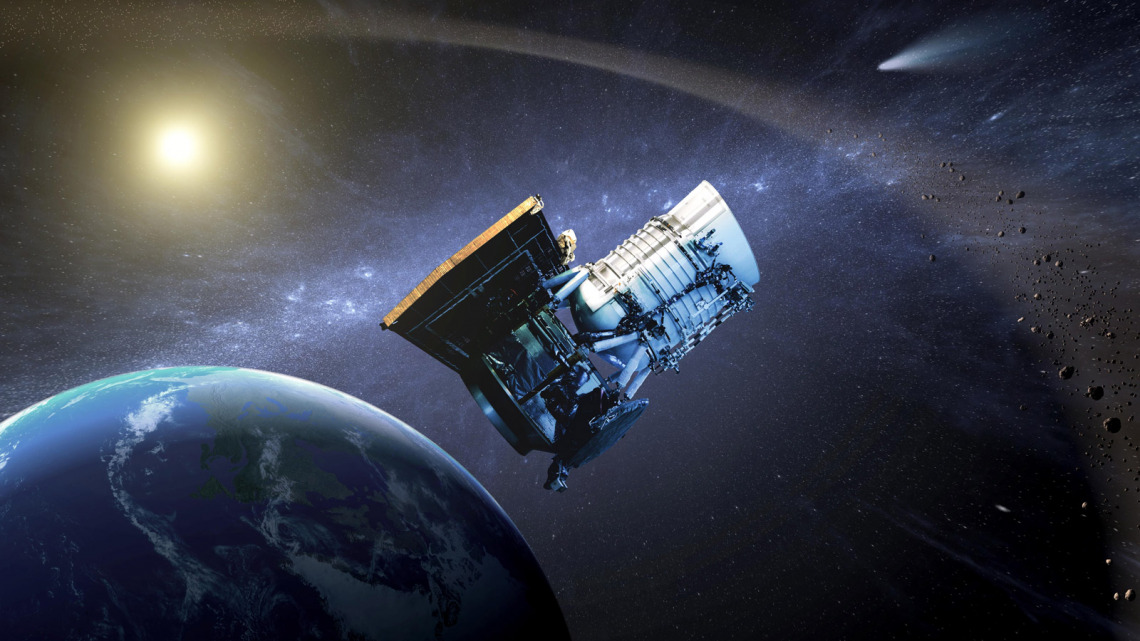
The NEOWISE infrared-wavelength astronomical space telescope has made well over a million infrared observations of more than 39,000 asteroids and comets throughout the solar system.NASA/JPL
NASA has approved- a two-year extension of NEOWISE, a mission dedicated to discovering and measuring the sizes of asteroids and comets that could pose an impact hazard to Earth. The principal investigator for NEOWISE is Amy Mainzer, a professor in the University of Arizona Lunar and Planetary Laboratory.
As principal investigator of NASA’s Near-Earth Object Wide-field Infrared Survey Explorer mission, Mainzer oversees the first dedicated space-based asteroid-hunting project in history. The mission has resulted in the detection and characterization of an unprecedented number of asteroids and comets, including objects that could potentially pose a hazard to Earth in the future.
“Few universities, if any, are as active in asteroid science as we are, and we were very fortunate when Dr. Mainzer joined us two years ago,” said University of Arizona President Robert C. Robbins. “Dr. Mainzer is one of the world’s top asteroid researchers, and her leadership in this field is critically important to tackling the grand challenge of planetary security. I look forward to seeing how she and her team further advance this work.”
NEOWISE has been conducting a survey of asteroids and comets that come close to the Earth since the mission’s reactivation in December 2013. Near-Earth objects, or NEOs, are asteroids and comets with orbits that come close to Earth’s orbit.
Extended to run through 2023, NEOWISE will keep watch for Earth-approaching objects and use its heat-sensitive detectors to measure the objects’ sizes and the reflectivity of their surfaces.
The telescope senses the heat that objects re-emit from being warmed by sunlight instead of the visible light that is reflected off their surfaces, so the mission is particularly good at spotting very dark asteroids and comets, Mainzer explained.
“NEOWISE has shown that roughly a third of near-Earth asteroids are as dark as printer toner,” she said. “Dark asteroids are more easily missed by telescopes that use visible light because they appear very dim. But to NEOWISE, they stand out brightly in the infrared wavelengths.”
NEOWISE was not originally designed to search for asteroids and comets. The spacecraft was launched in December 2009 as the WISE mission and conducted an infrared survey of the whole sky to search for the universe’s brightest galaxies and make a map of the sky to find interesting targets for observations by NASA’s James Webb Space Telescope. However, it turned out to be useful for characterizing asteroids and comets – so much so that after WISE was put into hibernation in February 2011, the NASA NEO Observations program asked it to be reactivated.
The mission was re-dubbed NEOWISE when it turned its eyes back to the sky in 2013. It is complementary to Earth-based searches for NEOs, Mainzer said.
“NEOWISE has taught us a lot about how to find, track and characterize Earth-approaching asteroids and comets using a space-based infrared telescope,” Mainzer said. “The mission serves as an important precursor for carrying out a more comprehensive search for these objects using the new telescope we’re building – the NEO Surveyor.”
NEO Surveyor is a successor mission led by Mainzer that was approved by NASA for further development this month. Scheduled to launch in 2026, it will provide a comprehensive space-based capability to survey for near-Earth objects and comets and will greatly expand on what scientists have learned, and continue to learn, from NEOWISE. Development of NEO Surveyor is a key initiative of the University of Arizona’s strategic plan.
Thousands of Asteroids Observed
NEOWISE has delivered physical data on an enormous number of asteroids and comets, and efforts are underway to mine even more findings out of the dataset. It has also discovered more than 30,000 previously unknown asteroids, including 338 near-Earth asteroids and 34 comets. Since its restart in 2013, the mission has made 1,130,000 confirmed infrared observations of approximately 39,100 objects throughout the solar system. So far, NEOWISE data have been used to determine the numbers, sizes and orbital elements of NEOs, as well as reveal the properties of other asteroids and comets farther out in the solar system. In total, the telescope has observed about 1,850 of the largest near-Earth asteroids.
NEOWISE data have been extensively used by the scientific community, resulting in more than 1,600 peer-reviewed scientific publications. All of the data have been delivered on schedule through the publicly accessible NASA Infrared Science Archive hosted by IPAC at Caltech.
Among NEOWISE’s many accomplishments was the discovery in 2020 of the comet NEOWISE, named after the mission.
As the telescope has continued to perform well despite being long past its intended seven-month lifetime, NASA’s Planetary Defense Coordination Office has extended the reactivated mission, with this most recent extension adding two years to the intended duration of spacecraft operations, to June 2023.
“NEOWISE provides a unique capability in our global mission of planetary defense by allowing us to measure the infrared emission and rapidly estimate the size of hazardous asteroids,” said Michael Kelley, NEOWISE program scientist at NASA Headquarters.
Comet NEOWISE—named after the mission that discovered it —captured on July 6, 2020 above the northeast horizon just before sunrise in Tucson.Vishnu Reddy
“As asteroids are warmed by the sun, they absorb that heat and release it as infrared light. Using these measurements, combined with reflected light measurements from ground-based telescopes, we can figure out both how big the asteroid is and how reflective it is, which gives us some information about its composition,” said NEOWISE Deputy Principal Investigator Joseph Masiero, a scientist at IPAC at the California Institute of Technology. “To date, NEOWISE has provided size and reflectivity characterization for over 1,800 near-Earth objects, helping us better understand our nearest neighbors in the solar system.”
NASA’s Jet Propulsion Laboratory in Pasadena, California, manages and operates the NEOWISE spacecraft for NASA’s Planetary Defense Coordination Office in the Science Mission Directorate in Washington, D.C. The Space Dynamics Laboratory in Logan, Utah, built the science instrument. Ball Aerospace & Technologies Corp. of Boulder, Colorado, built the spacecraft. Science data processing takes place at IPAC at Caltech. Caltech manages JPL for NASA.