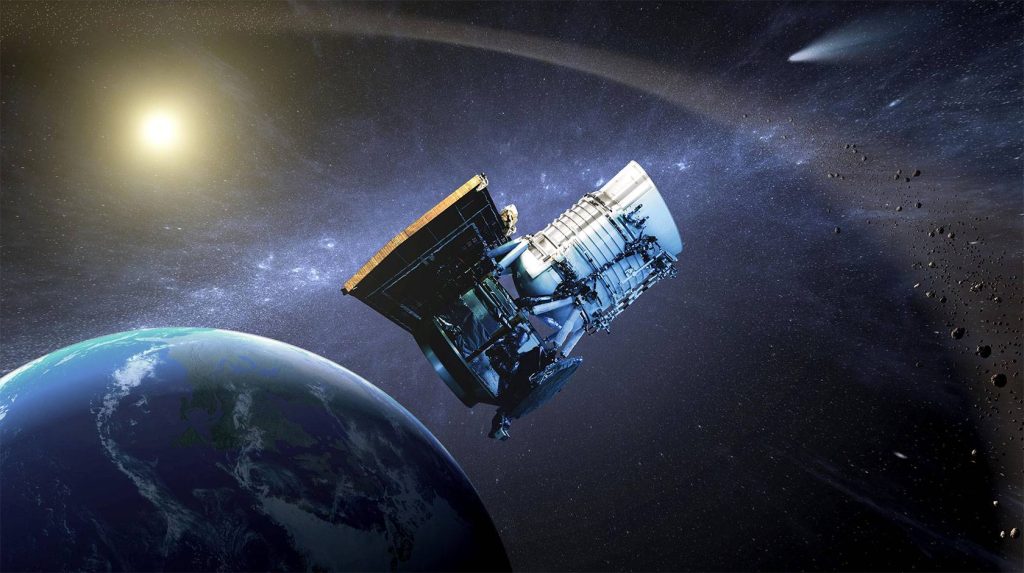
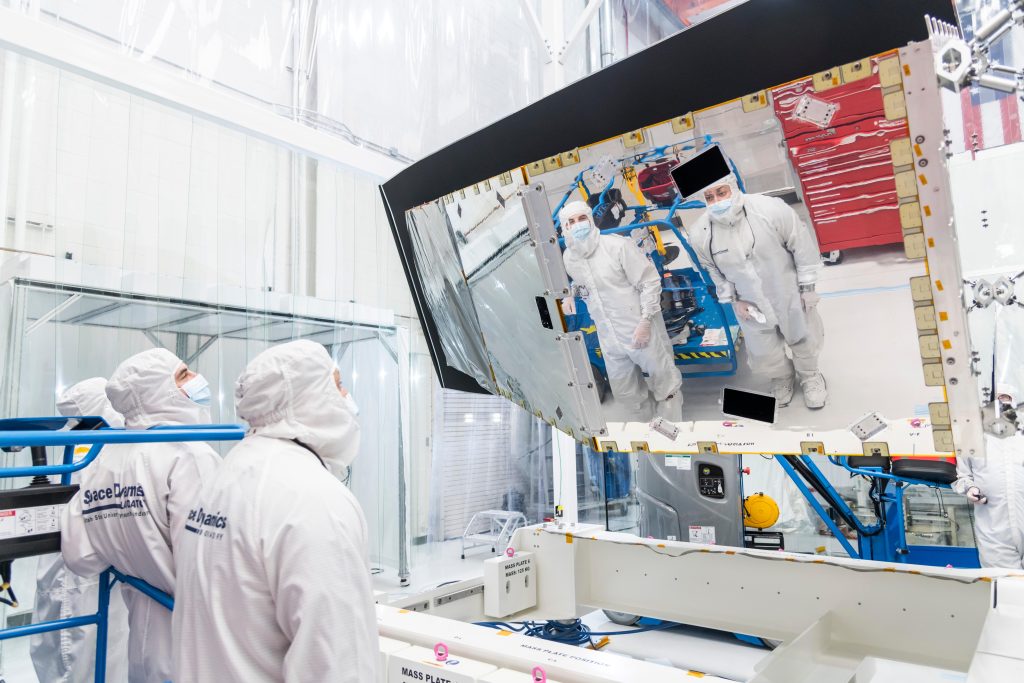
On Saturday, April 25th, 2026, K-12 educators from across Los Angeles County (and around the U.S., via our virtual option) gathered at UCLA to find out what it takes to defend the planet!
In an exciting collaboration between NASA’s Near-Earth Object Surveyor team and UCLA’s CenterX, we developed a dynamic teacher-training workshop dedicated to our K-12 educators with a focus on planetary defense, astronomy, and earth science. Teachers didn’t just sit and listen—they became the students, participating in scaffolded lectures and test-driving hands-on demonstrations designed to bring asteroid science straight into the classroom.
Thank you to all the brilliant educators who joined us to bring the universe a little closer to their students!
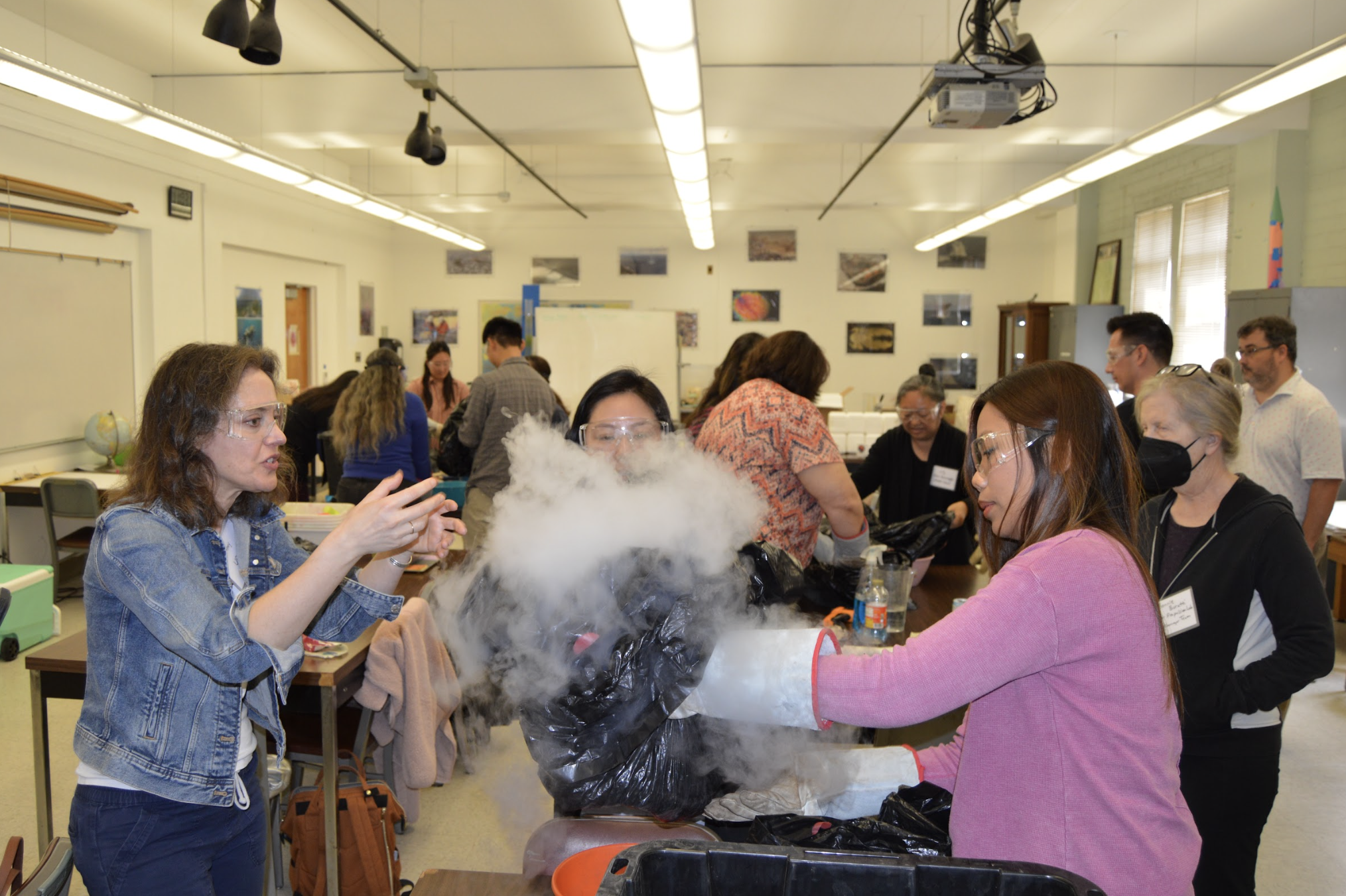
We started out the day with an introduction to the team and with a impactful visual of the Chelyabinsk fireball (see dash cam video here) that fell through the sky in Russia in 2013. We dove right into think-pair-share activities to discuss the impact and come up with questions that through a Learner Lens seem relevant to our every day lives. For example, how would you feel if you saw this on your commute to work? What is the fireball made out of? How much damage did it cause?
Then, during lectures and guided activities, we switched point of view to a Teacher Lens. We discussed how these questions might come up in the classroom and how we can support our students better understand these topics.
We incorporated affordable, accessible, and interactive demonstrations that would be easy to replicate in the classroom.
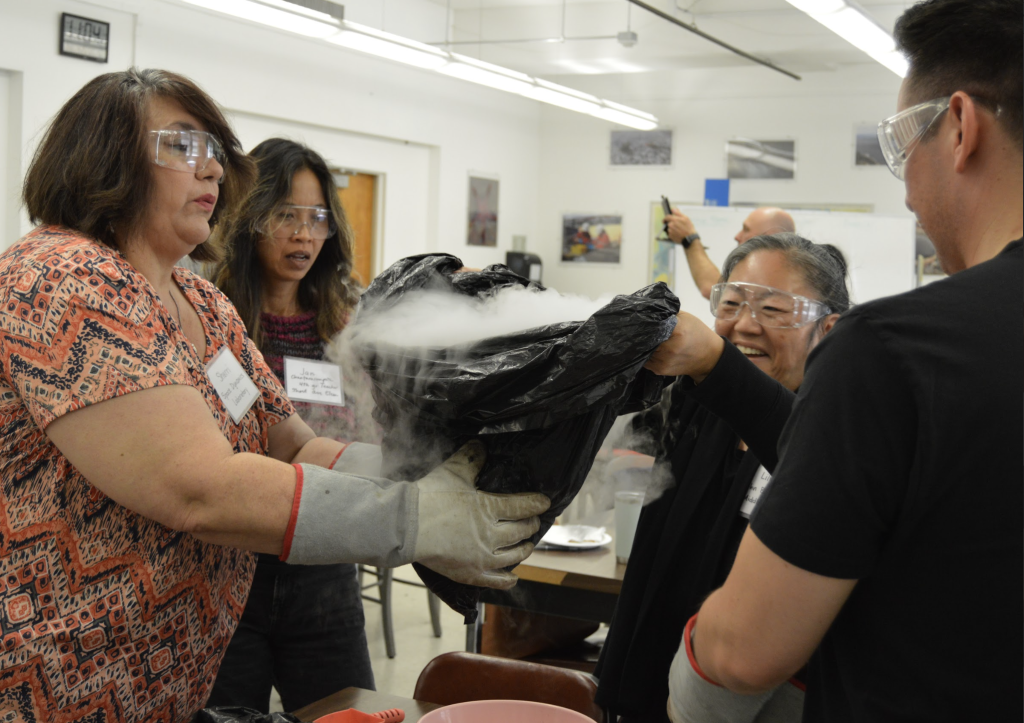
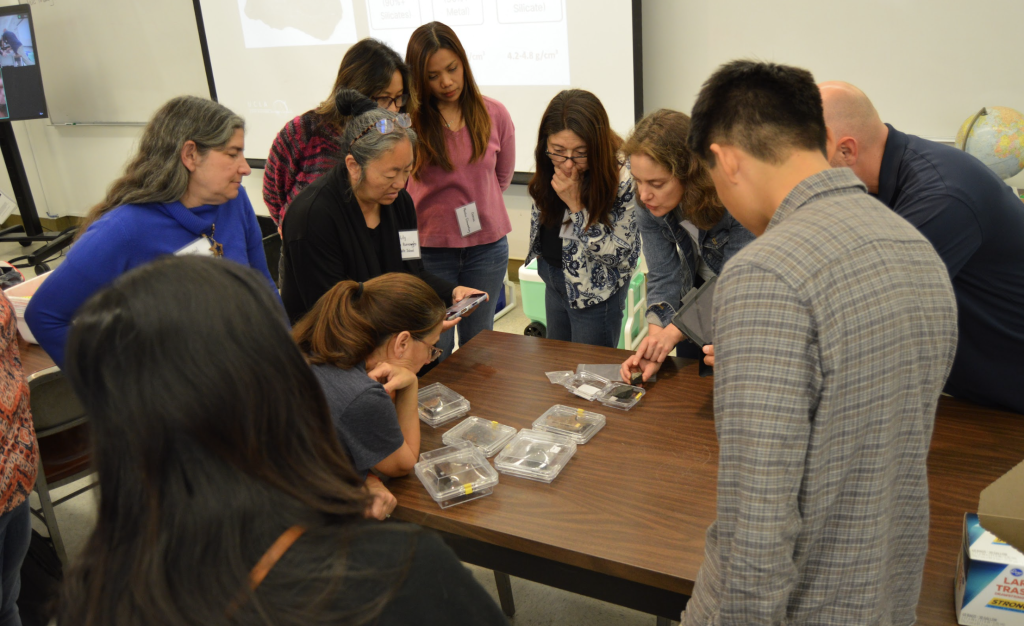
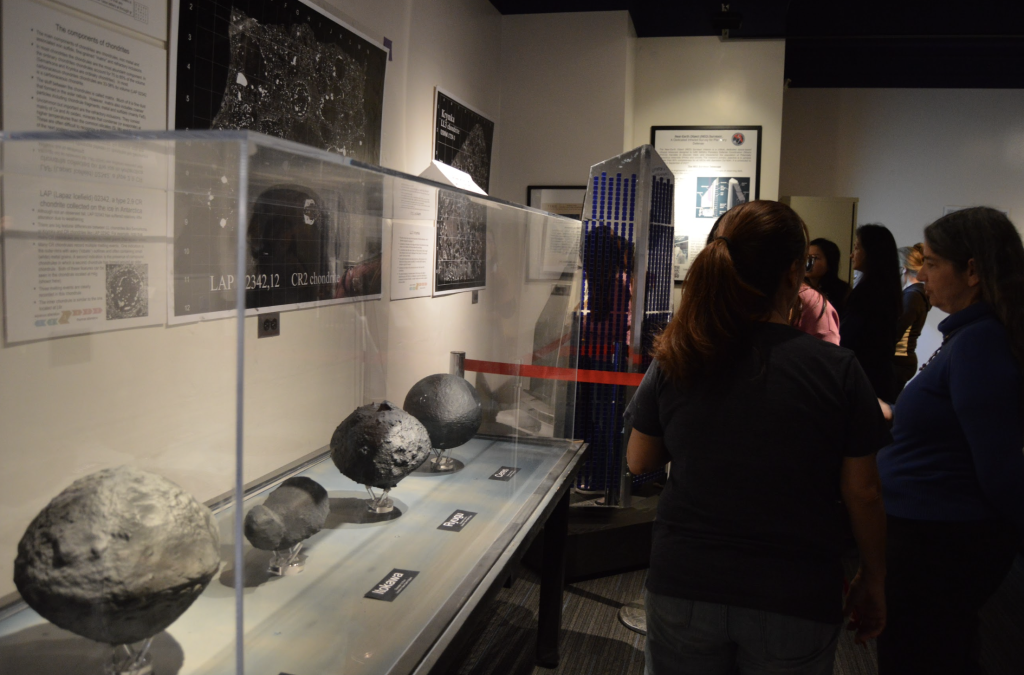
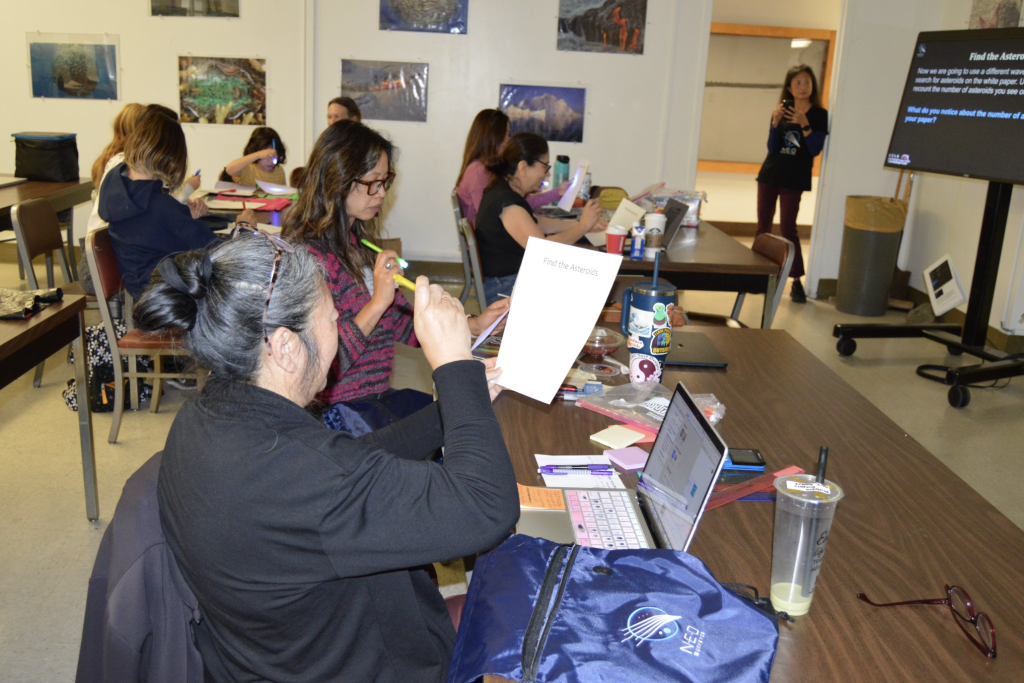
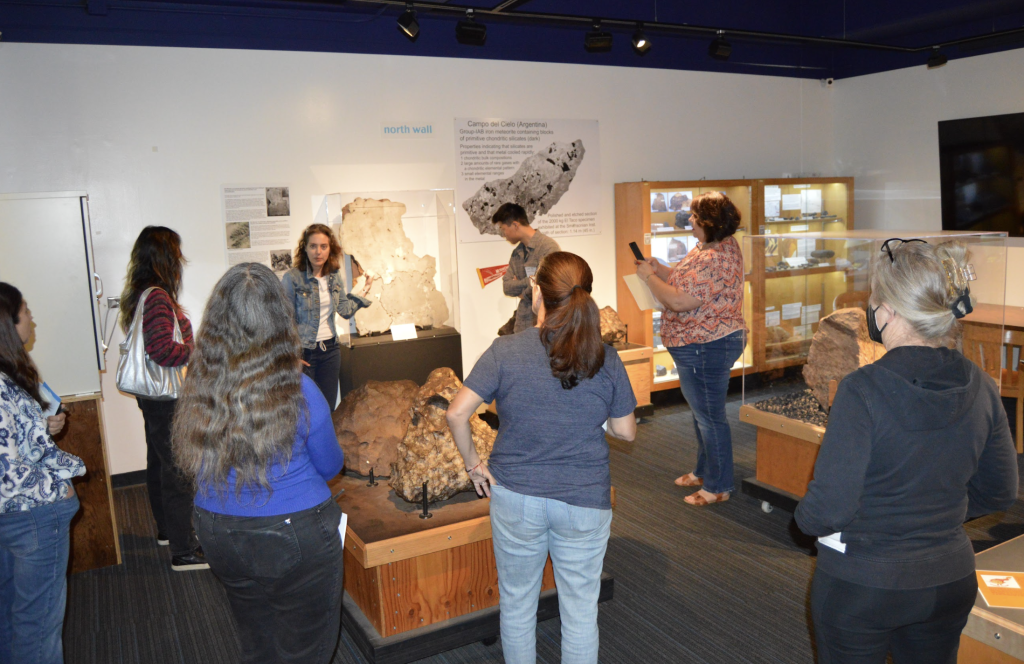
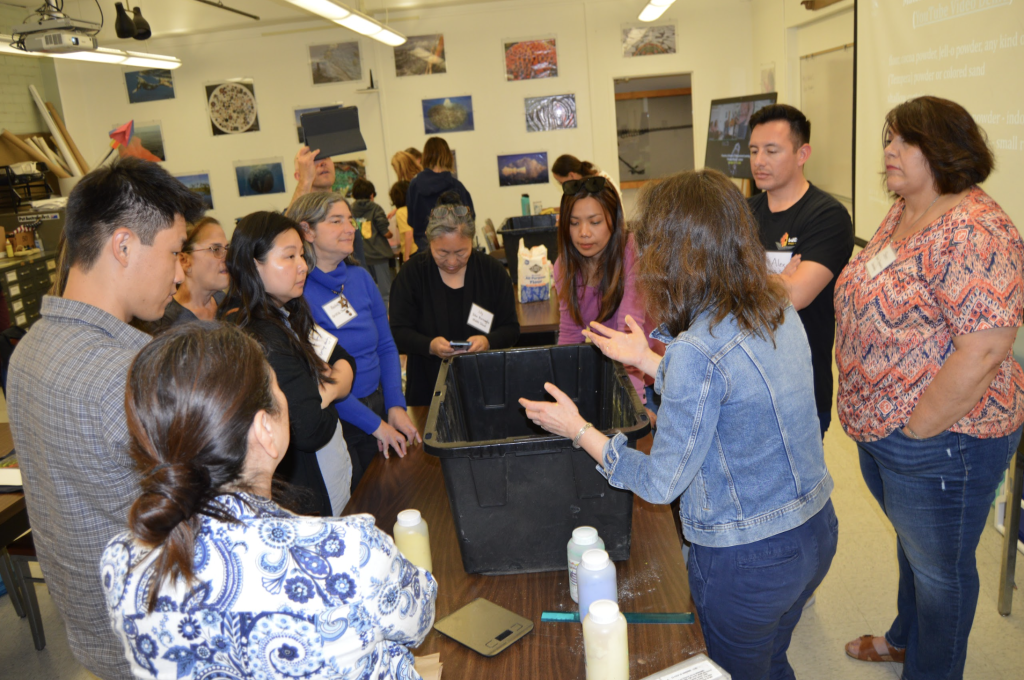
Photo Captions. Top-Left: Educators learning how to “Build-Your-Own Comet” by putting key ingredients in a bag and mixing them together. Top-Center: Getting to hold real meteorites and learning how to distinguish the different types of meteorites. Top-Right: Trip to the UCLA Meteorite Gallery to explore the largest meteorite collection on the West Coast – this is a case with 3-D printed asteroids. Bottom-Left: “Find the Asteroids” activity while exploring the electromagnetic spectrum. Bottom-Center: Dr. Amy Mainzer giving everyone some fun facts about the asteroids/meteorites. Bottom-Right: Mess-proof Cratering demonstration (container inside a large bin to contain ejecta).
Educator comments about the workshop:
| Thank you very much for allowing us to explore and “play” with ways to model comets and asteroid impacts! | It is so refreshing and humbling to know that there is so much more I need to learn, and that today’s learning is just a part of it. I had fun. Thank you! |
| Overall, I thought this workshop was really informative. It would be amazing to reach more teachers. This is important work and I think super important to forge relations with our K-12 and local universities. I hope to continue to stay connected!! | I really appreciated the enthusiasm and passion for the material and subject matter being covered. It was well executed! |
Classroom Highlight:
Jr. Planetary Defenders in Ms. Buen’s 3rd-Grade Class!
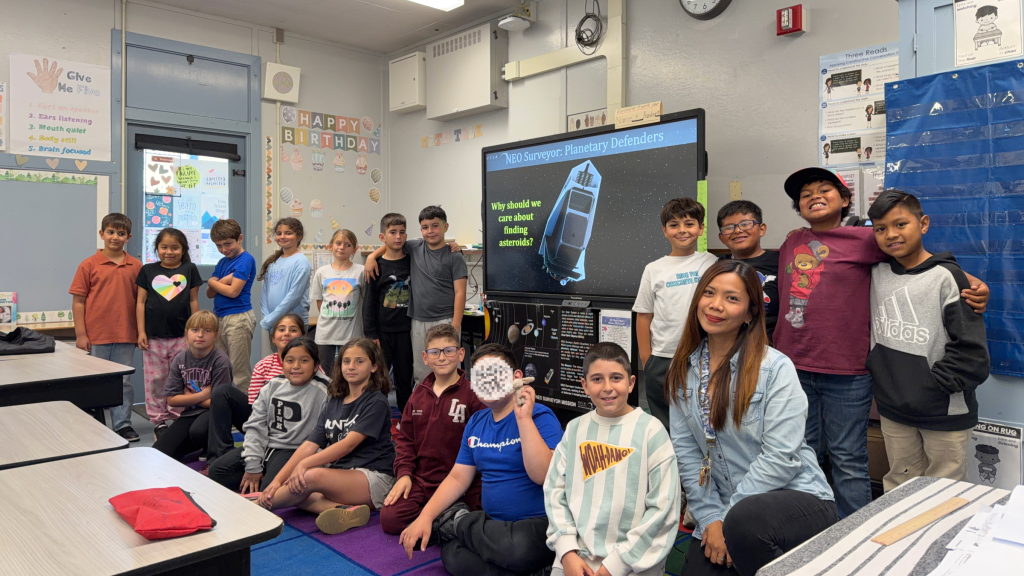
Soon after our April workshop, Ms. Buen hit a home run bringing her workshop inspiration back to Room 4! She designed her own “Find the Asteroid” activity using UV light pens to reveal four hidden asteroids per page. Her students—including nine English Language Learner students who were beautifully engaged and actively sharing thoughts—became fiercely competitive and wonderfully puzzled trying to guess the hidden asteroids.
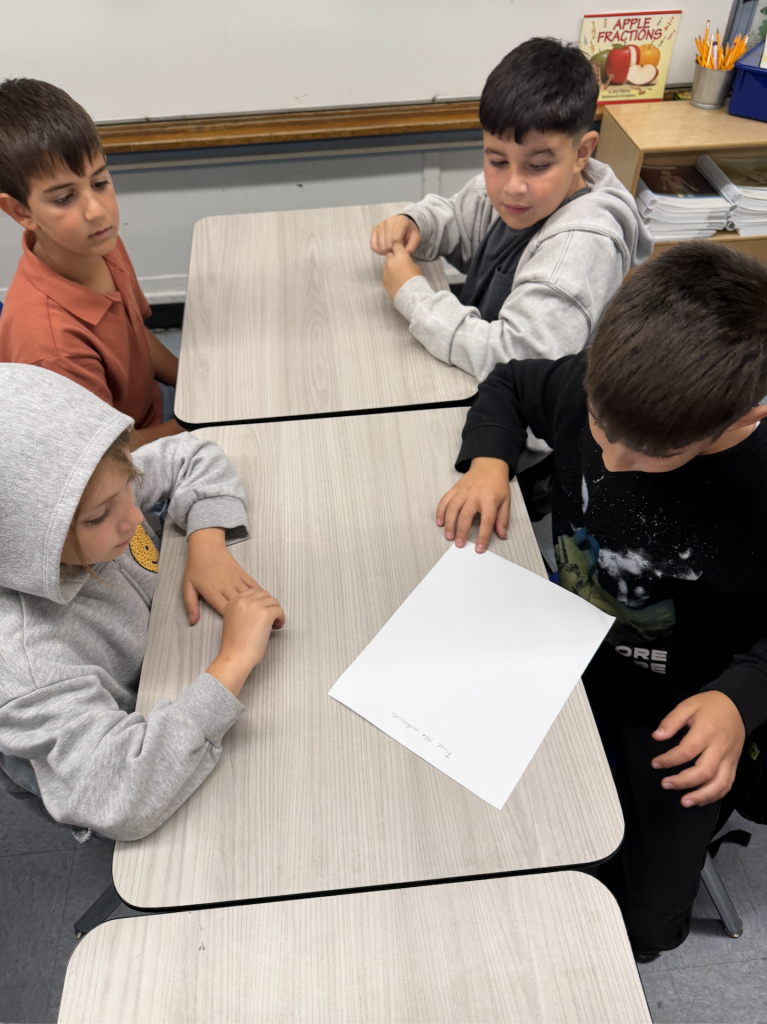
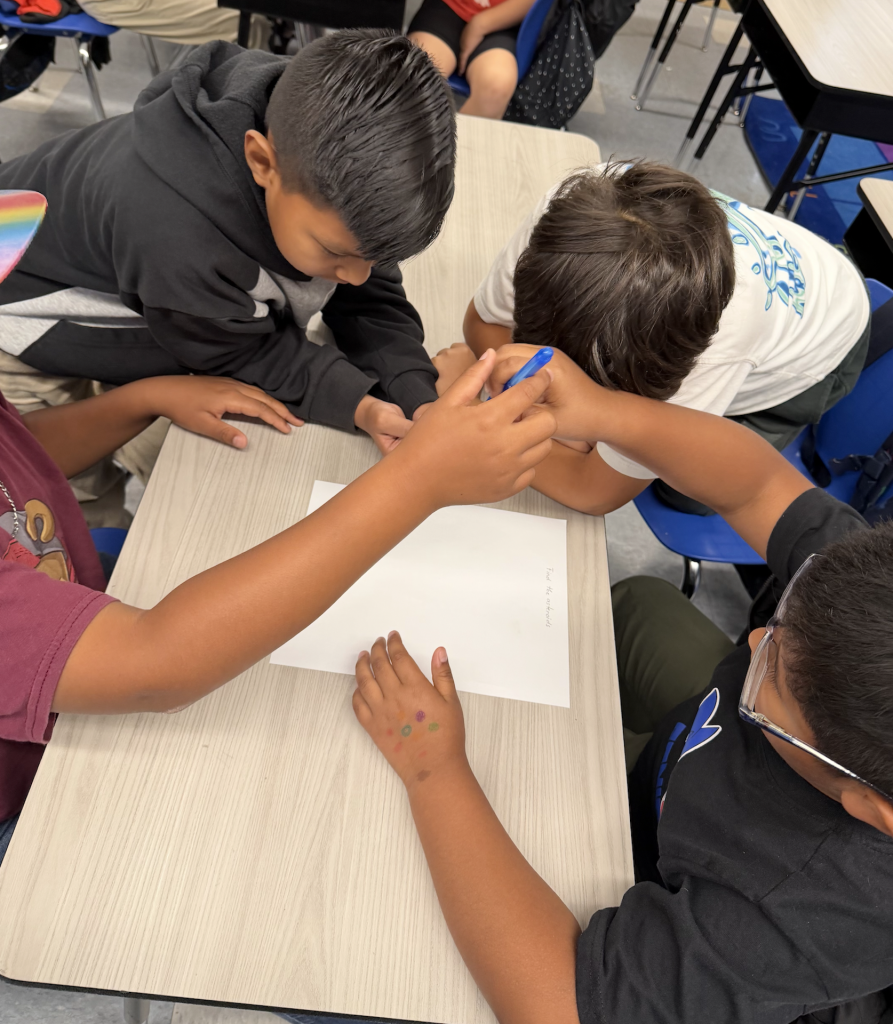
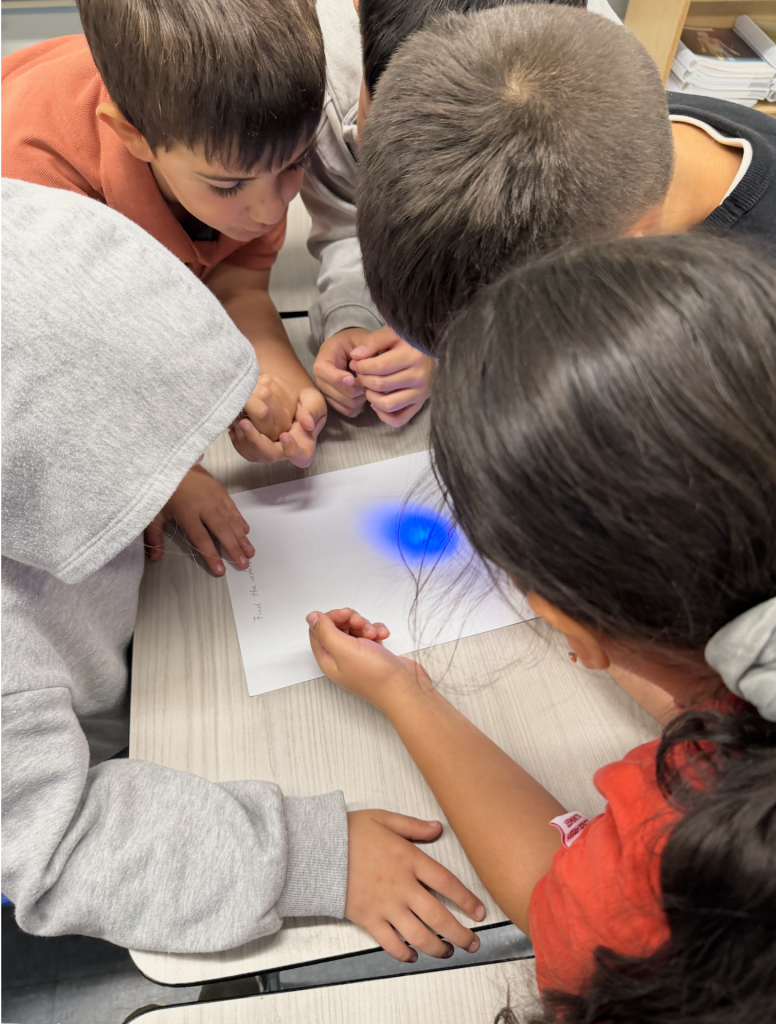
Jr. Planetary Defenders after they are given an “instrument” to find the asteroids.
The excitement continued with a multi-sensory Crater Demo. Instead of paint powder, she used a mix of flour, cocoa powder, and ground coffee, making the room smell exactly like a cozy café. Using a mix of real rocks and glow-in-the-dark marbles as impactors, the kids were completely hooked. The memorable day wrapped up with a high-stakes magic pen raffle and a colorful marble keepsake for every single student.
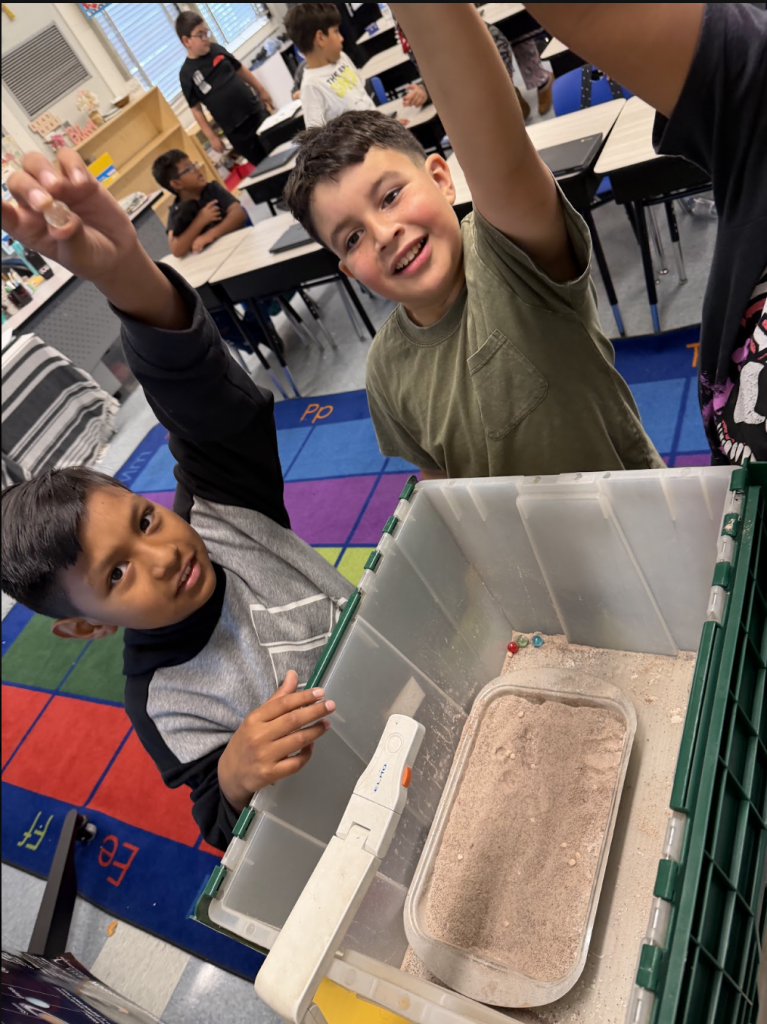
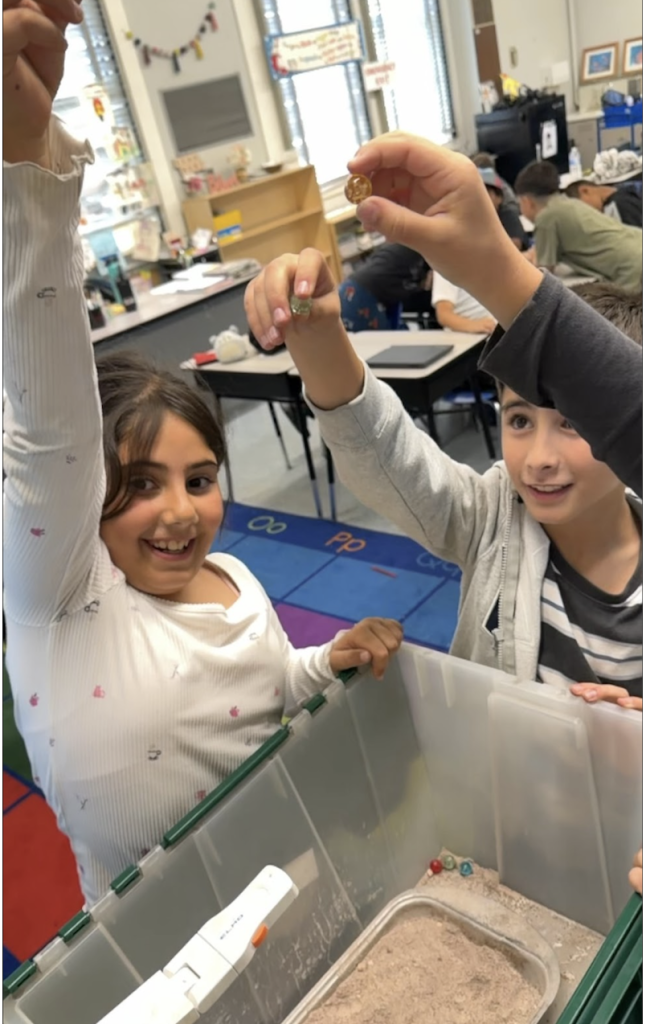
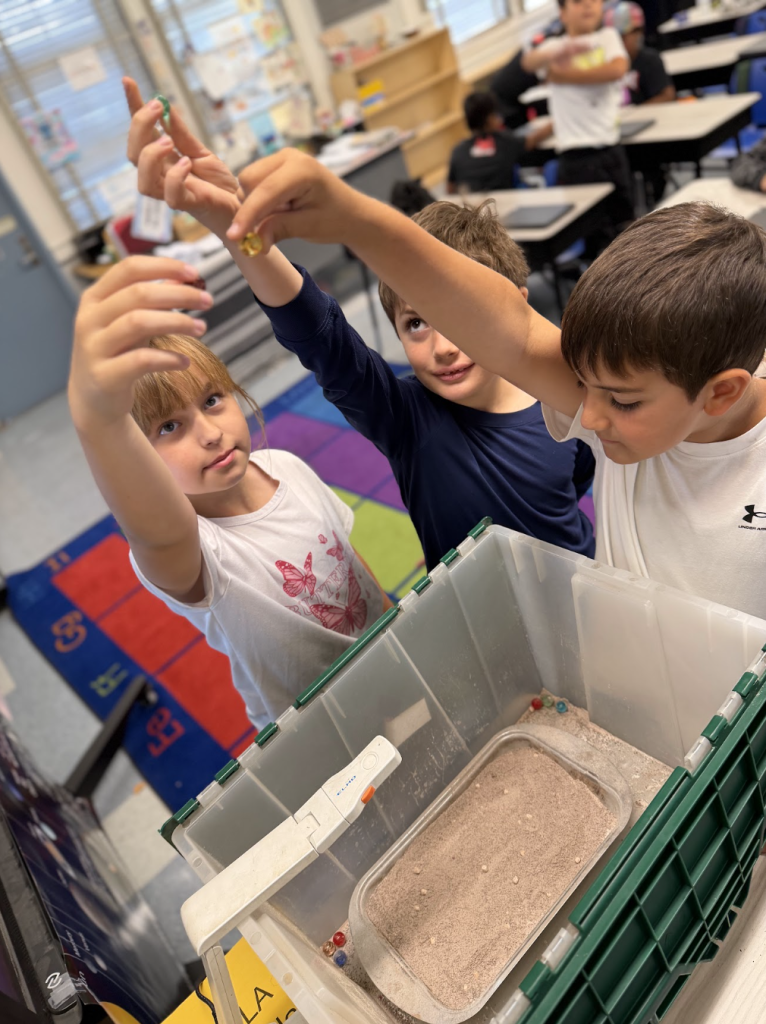
Jr. Planetary Defenders excited to drop marbles/objects during the Crater Demo and being curious about what happens!
“Ms. Buen, when the asteroid hits, why do the people get injured if they’re so far away from the asteroid?”
“Why did you all (Amy, Bonnie, Selmer, Valeria) choose to be scientists?”
“I want to ask Ms. Bonnie how many asteroids she’s researched and how she researches them?”
“Dear Miss Amy, how did you start your career? Do you like being a scientist and investigating things that are planetary? Do you like your job? Do you like how people talk to you? And do you like being a Principal Investigator?”
-Jr. Planetary Defenders (3rd grade)
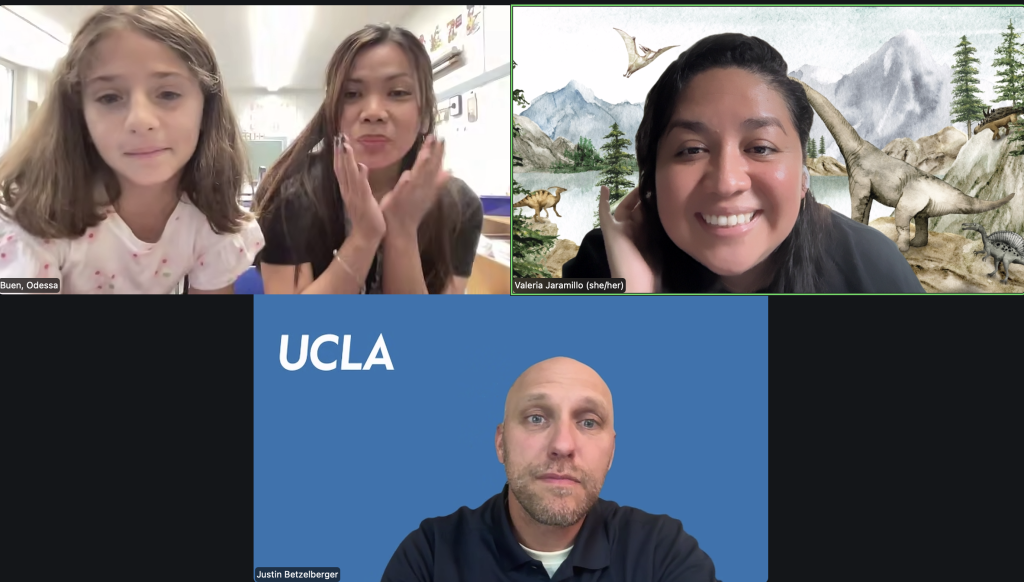
To answer all of the student’s burning questions, Valeria and Justin joined a Zoom meeting with the classroom!
It was so much fun to see first-hand the excitement in Ms. Buen’s classroom and all the interesting questions that the students came up with about asteroids, dinosaurs, and more!!!
We are passionate about making science accessible to everyone and inspiring the next generation of scientists. This is why we do this!
Meet the brilliant minds behind our mission!
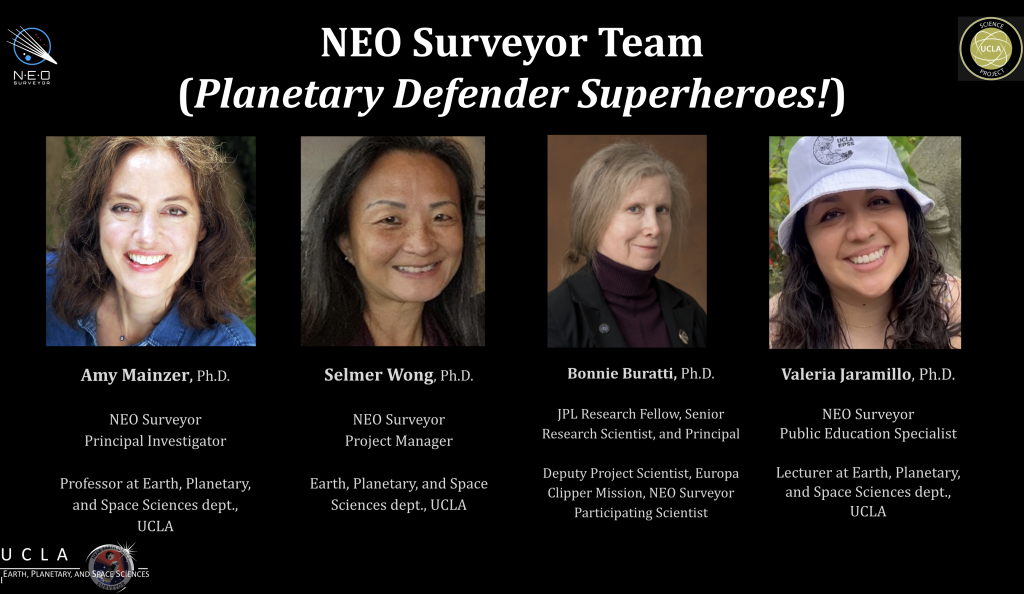
Our amazing team consists of active scientists and educators who don’t just push the boundaries of space exploration—they absolutely love sharing the thrill of discovery with the world. From tracking near-Earth asteroids to developing innovative classroom tools, our leadership team brings authentic, front-line NASA science straight to educators and the public.
Get to know the brilliant experts leading the way:
- Dr. Amy Mainzer – World-Renowned Planetary Scientist and Principal Investigator (P.I.) – Amy is a leading expert in infrared astronomy and minor planet detection. As the P.I. for NASA’s Near-Earth Object Surveyor (NEO Surveyor) mission her passion for planetary defense is matched only by her dedication to public science communication, helping audiences of all ages understand how we protect our home planet.
- Dr. Bonnie J. Buratti – Distinguished Senior Research Scientist at NASA’s Jet Propulsion Laboratory (JPL) -Bonnie specializes in the chaotic and beautiful surfaces of asteroids, comets, and icy moons. She has served on monumental NASA missions, including Voyager, Cassini, and New Horizons. Bonnie brings a wealth of deep-space exploration experience to our team and is a fierce advocate for making complex planetary geology accessible and exciting to the public.
- Dr. Selmer Wong – Project Manager – Selmer is the organizational backbone of our mission, keeping our complex scientific and educational initiatives running smoothly. With a deep background in physics and extensive experience managing high-level academic and space-science projects, she excels at turning ambitious scientific goals into organized, impactful realities.
- Dr. Valeria Jaramillo – Public Education Specialist – Valeria bridges the gap between the lab and the classroom. As the public education specialist, she is dedicated to creating inclusive, scaffolded STEM curricula that empower K-12 teachers. Her expertise ensures that cutting-edge planetary data is translated into hands-on, standards-aligned activities that inspire the next generation of earth and space scientists.
Together, this powerhouse team is working hard to bring the universe a little closer to local classrooms.
In the wise words of our P.I. Dr. Amy Mainzer:
“If you want to be a scientist, all you have to do is keep asking questions.”
Ready Jet Go YouTube video: https://www.youtube.com/watch?v=AxY2TM1HmAc
Stay tuned for future workshops!
Feel free to email Dr. Valeria Jaramillo at jaramillov29g.ucla.edu if you have any questions!
Follow us on Instagram @neosurveyormission